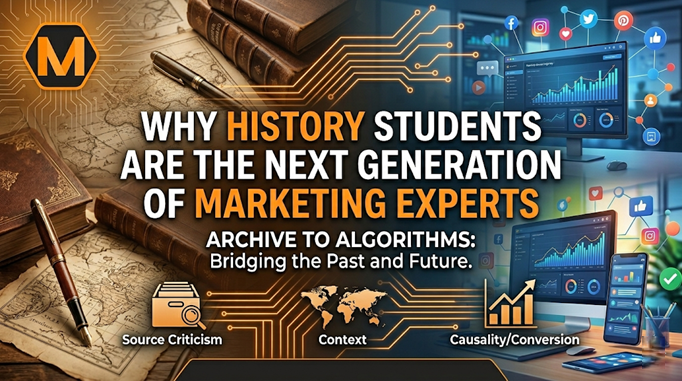
The modern marketing landscape is often viewed through the lens of data points, algorithms, and real-time analytics. However, beneath the surface of every viral campaign or successful brand pivot lies a fundamental understanding of human behavior, cultural shifts, and narrative structure. Interestingly, the individuals best prepared to navigate this complex terrain aren’t just coming from business schools—they are emerging from history departments. History students are uniquely trained to connect the dots between the past and the future, making them an untapped powerhouse in the digital marketing world.
The transition from analyzing the causes of the French Revolution to optimizing a social media strategy might seem like a leap, but the core competencies are identical. Marketers today must be expert researchers and storytellers. For an undergraduate student aiming to bridge this gap, mastering the art of documentation is essential. Whether you are drafting a thesis or a creative brief, utilizing professional history essay help can provide the structural foundation needed to present complex arguments clearly—a skill that translates directly into high-ranking web content.
The Architecture of Persuasion: Research and Context
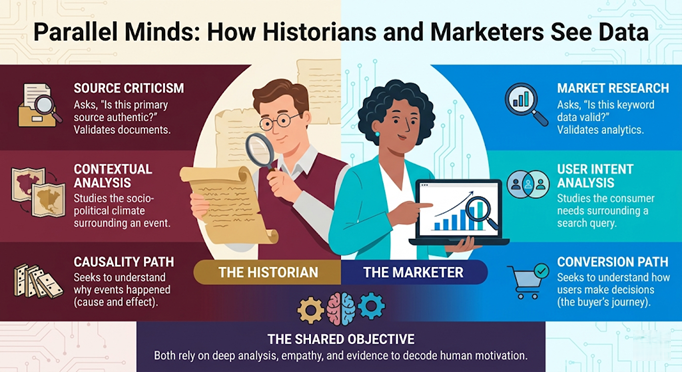
In marketing, context is everything. A campaign that works in London might fail in Dubai if the cultural context is ignored. History students spend years diving into archives, cross-referencing primary sources, and questioning the “why” behind major events. This “investigative mindset” is exactly what a search engine optimization (SEO) strategist needs to understand user intent.
When a historian looks at a document, they ask: Who wrote this? Who was the audience? What was the socio-political climate? When a marketer looks at search data, they ask: Who is searching? What problem are they solving? What is the current trend? The ability to synthesize vast amounts of information into a coherent strategy is the historian’s greatest asset.
Case Study: The Power of the Narrative
Marketing is essentially the “history of the present.” Brands are constantly trying to write themselves into the lives of consumers. To do this effectively, they use symbols, slogans, and stories that resonate with historical archetypes of success, comfort, or rebellion.
Consider how corporate giants maintain their dominance. It’s not just about the product; it’s about the legacy and the message. For example, the evolution of the Walmart slogan serves as a fascinating study in how a brand adapts its public “voice” to match the economic history of the middle class. By analyzing these shifts through resources provided by MyAssignmentHelp, marketing professionals can learn how to pivot a brand’s identity without losing its core audience. This type of analysis requires a deep understanding of linguistics and social history, which are hallmarks of a humanities education.
Why the Humanities Outperform Algorithms
While AI can generate a thousand headlines in seconds, it lacks “Information Gain”—the ability to provide a unique, human perspective that hasn’t been said before. Google’s latest updates specifically reward content that shows “Experience and Expertise.”
History students are trained to find the “hidden angle.” They don’t just report facts; they interpret them. In a world saturated with generic content, the ability to provide a unique historical parallel or a deep-dive analysis is what makes an article rank on the first page.
| Skillset | History Application | Marketing Application |
| Source Criticism | Validating historical documents | Identifying credible data & influencers |
| Trend Analysis | Identifying cycles of revolution/reform | Predicting consumer behavior patterns |
| Narrative Craft | Writing compelling biographies/histories | Creating brand stories & “About Us” pages |
| Cultural Literacy | Understanding global civilizations | Managing international SEO & localization |
The Global Tone: Communicating Across Borders
The world is more connected than ever. A student in Australia might be reading the same marketing blog as a student in Canada. History teaches us that despite our differences, human motivations—the desire for security, status, and community—remain constant across time and geography.
Writing in a “Global Tone” means avoiding local slang that might confuse an international reader, while still maintaining a warm, approachable voice. It means being inclusive and aware of how different cultures perceive authority and enterprise. History students, who study the rise and fall of global empires, are naturally predisposed to this kind of broad-minded communication.
Conclusion: The Future belongs to the Storytellers
As we move deeper into the age of AI, the value of human-led research and historical context will only increase. Brands are no longer looking for people who can simply “input data”; they are looking for people who can explain what the data means in the grander scheme of human history.
For history students, the digital world is a new kind of archive. By applying the same passion they have for the past to the strategies of the future, they are not just participating in the marketing industry—they are leading it. Whether you are analyzing a 19th-century treaty or a modern corporate slogan, remember that the goal is the same: to understand the human heart and speak to it clearly.
Frequently Asked Questions (FAQ)
Q1: Can a history degree really lead to a high-paying marketing job?
Ans: Absolutely. Many “Head of Content” and “Strategy Director” roles at major agencies are held by humanities graduates because they can think critically and write persuasively.
Q2: How do I start building a marketing portfolio as a student?
Ans: Start by writing guest posts on reputable sites. Use your academic research skills to write about topics like “The History of Consumerism” or “How the Printing Press Changed Marketing.” This shows you can apply your degree to real-world business.
Q3: Is SEO just about using the right keywords?
Ans: No. SEO is now about “Search Intent.” Google wants to provide the most helpful answer. Because history students are trained to answer the “big questions” with evidence, they are naturally good at creating the kind of helpful content Google loves.
Q4: How does studying slogans help in marketing?
Ans: Slogans are the shortest form of history. They tell us what a society valued at a specific moment. Analyzing them helps marketers understand how to trigger emotions and build long-term brand loyalty.
About The Author
I’m Thomas Taylor, a Senior Academic Consultant and Content Strategist at MyAssignmentHelp. With over a decade of experience in the educational sector, I specialize in helping students bridge the gap between complex theoretical concepts and high-impact writing.
About the Author